Commercial and multi-unit flooring
Floors specifiedfor traffic.
A working reference for the people who own, manage and maintain buildings. Pick the floor by traffic, subfloor and cleaning routine — then write it down so three quotes describe the same thing.
- Buildings
- Retail, office, multifamily
- Decision
- Type, rating, schedule
- Output
- A spec three trades can price
Move to tilt · tap the window
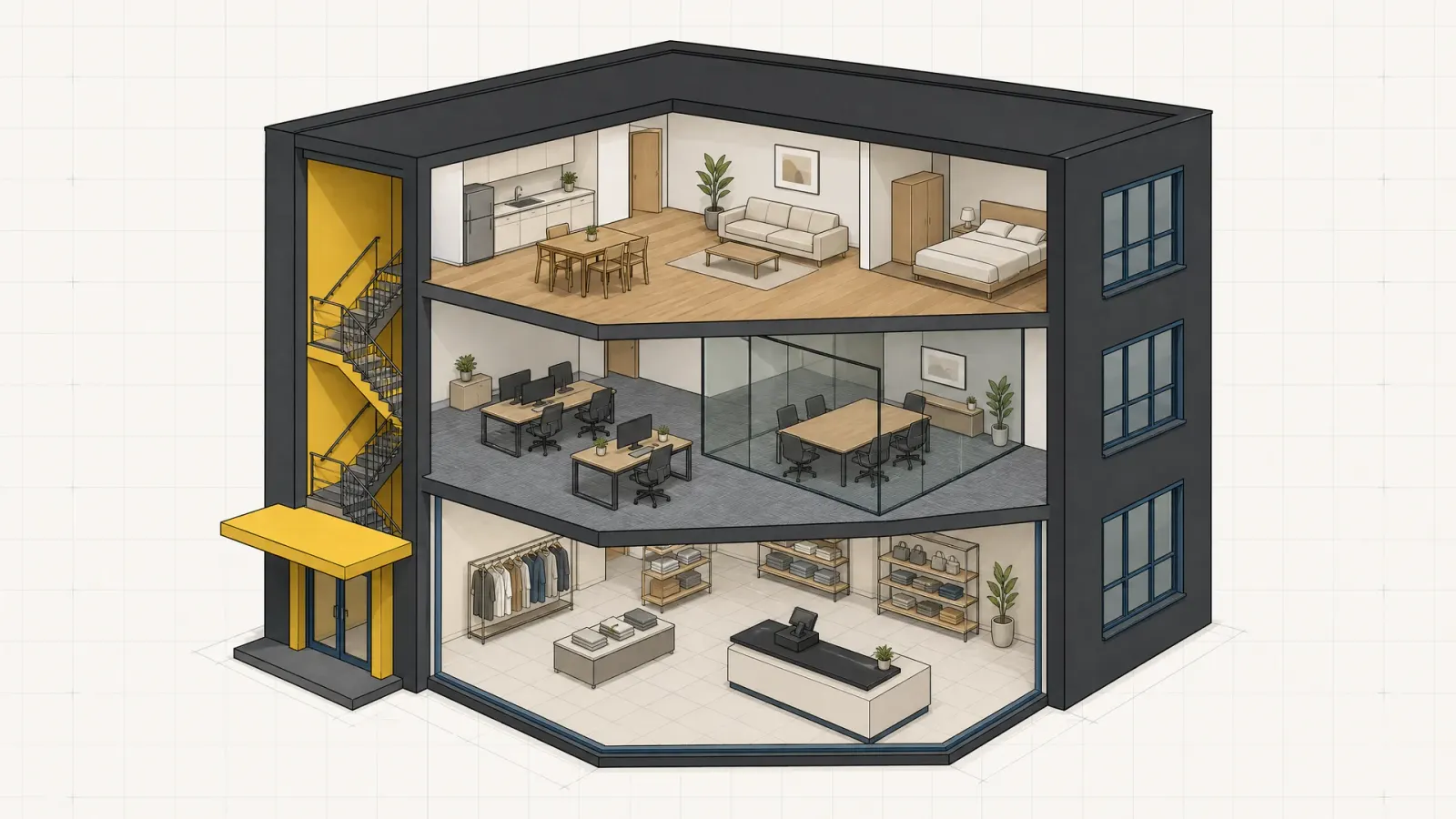
01 The three numbers
Traffic, wear layer, subfloor. Everything else is colour.
Most flooring arguments are really about one of these three. Get them in writing before anyone opens a sample book.
How hard does the floor work?
A lobby entrance, a leased office and a spare bedroom are not the same duty. Use class and wear layer to describe the duty instead of adjectives.
Read the ratings guide02 / WEAR LAYERHow much floor sits above the print?
In vinyl, the wear layer is the sacrificial surface. In laminate, the AC class does that job. Both are specified in numbers, not in “heavy duty”.
Compare wear layers03 / SUBFLOORWhat is the floor sitting on?
Slab moisture, deflection, old adhesive and flatness decide more installations than the finish does. Test before you buy.
Plan a rental turnover02 Floor types
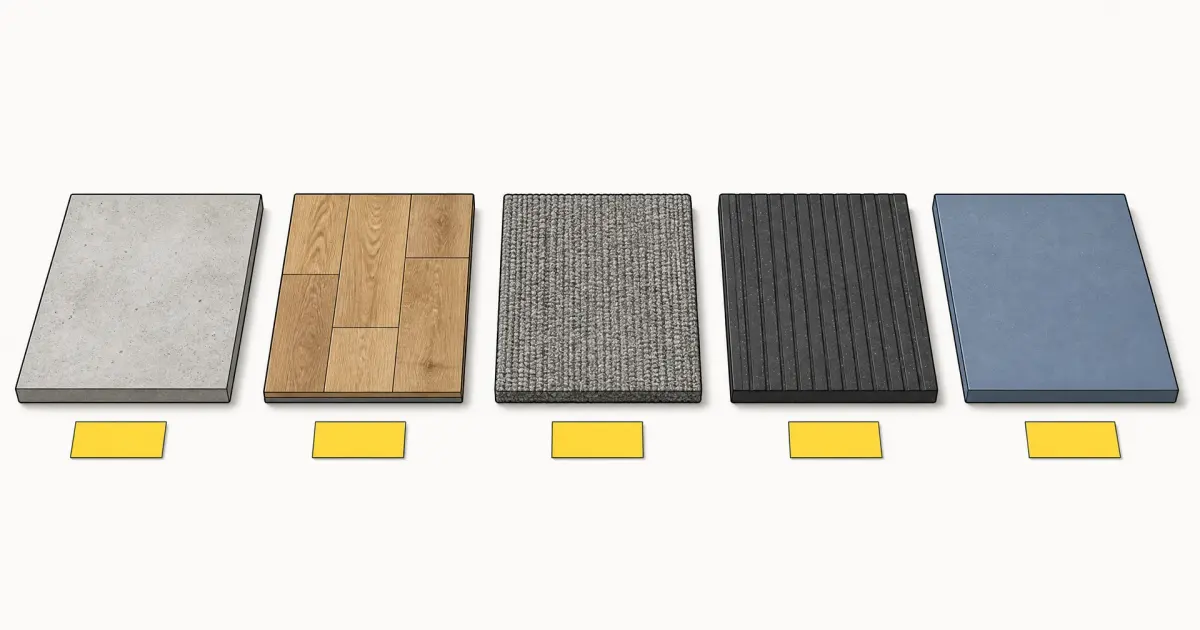
Five families cover most commercial floors.
Each one fails differently. The right question is not which is best, but which failure mode your building can tolerate.
Resilient: LVT, sheet vinyl, rubber, VCT
Warm underfoot, fast to install, repairable in patches. Watch subfloor tolerance and wear layer.
BHard surface: porcelain, quarry tile, concrete
Long service life and easy chemical cleaning. Harder underfoot, louder, and unforgiving of movement.
CTextile: carpet tile and broadloom
Acoustic control and a forgiving surface. Needs a cleaning plan and a sensible spare-tile stock.
DResin: epoxy and PU screeds
Seamless, coved and chemically resistant. Cure time and substrate preparation decide the result.
ETimber: engineered and solid
Refinishable and good-looking. Moisture and movement joints must be designed, not hoped for.
03 Rental units
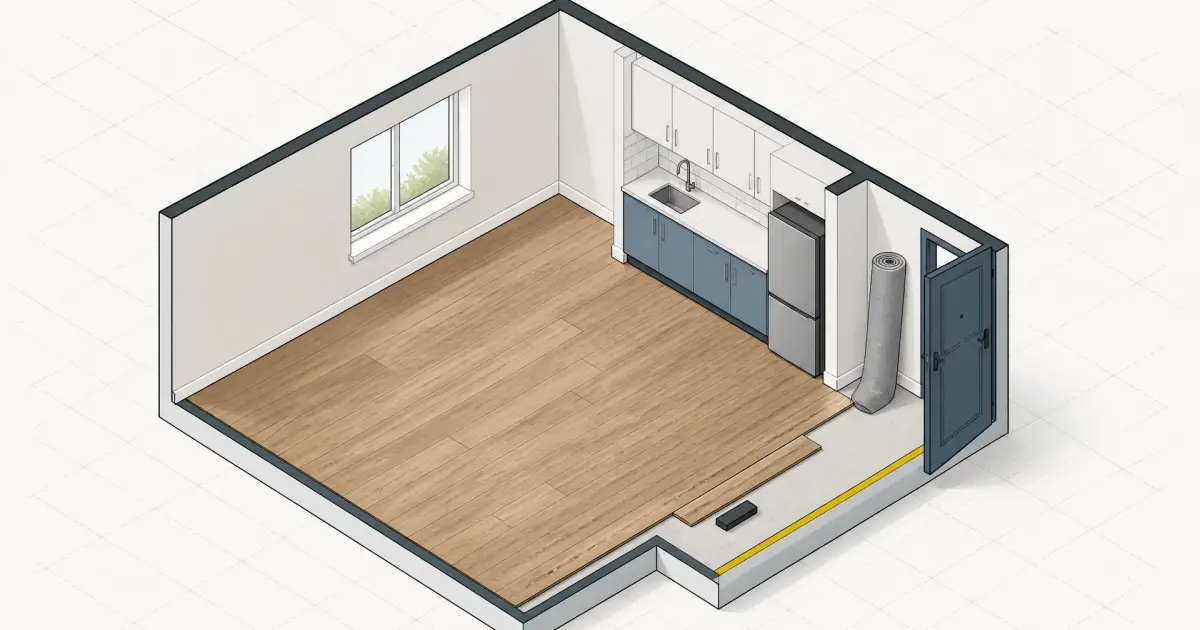
A turnover floor has to survive the next tenancy, not the next open house.
Rental flooring is a balance between repair cost and replacement cost. Plank is easier to patch; sheet vinyl is easier to keep water out of. Both need the same subfloor work.
- Photograph the existing floor and record the product before strip-out.
- Test slab moisture and flatness in the unit, not in the corridor.
- Keep one box of plank or a square of sheet vinyl for the next repair.
- Write the cleaning method into the tenancy pack — steam and excess water kill more floors than tenants do.
04 Maintenance
The schedule is part of the specification.
A floor that cannot be cleaned on your staffing model is the wrong floor, even if the sample was right.
| Frequency | Task | Why it matters |
|---|---|---|
| Daily | Dry sweep or vacuum, spot mop | Grit is the abrasive that wears a wear layer. |
| Weekly | Damp mop with the specified dilution | Over-strength chemical dulls finish and voids warranties. |
| Quarterly | Machine scrub, edge detail, drain check | Soil builds at edges and under fixtures first. |
| Annually | Condition survey and repair list | Turns a surprise replacement into a budget line. |
05 Field guides
Notes from the specification desk.
Written for the person who has to sign the purchase order, not for a search engine.
- Read →
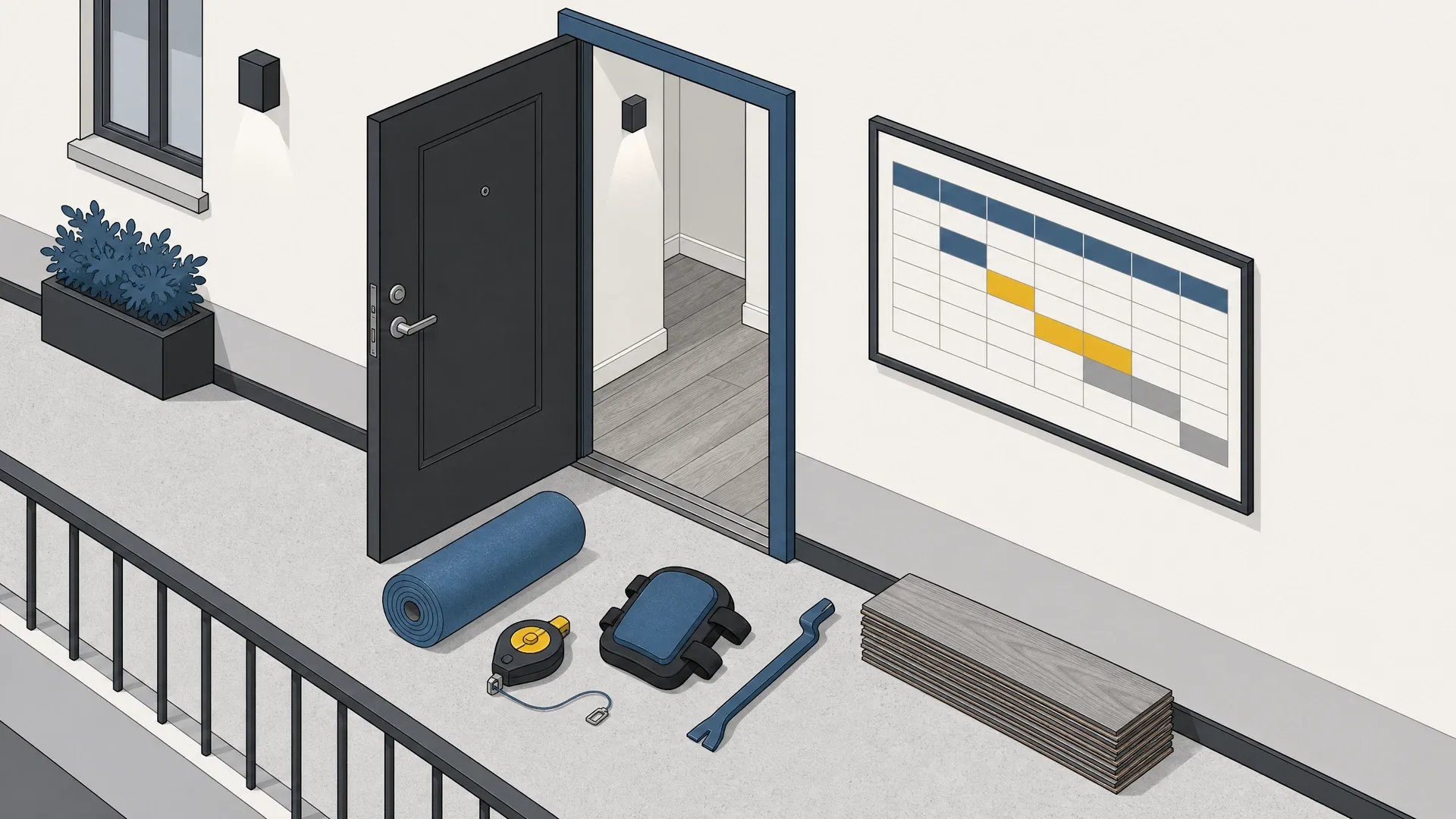
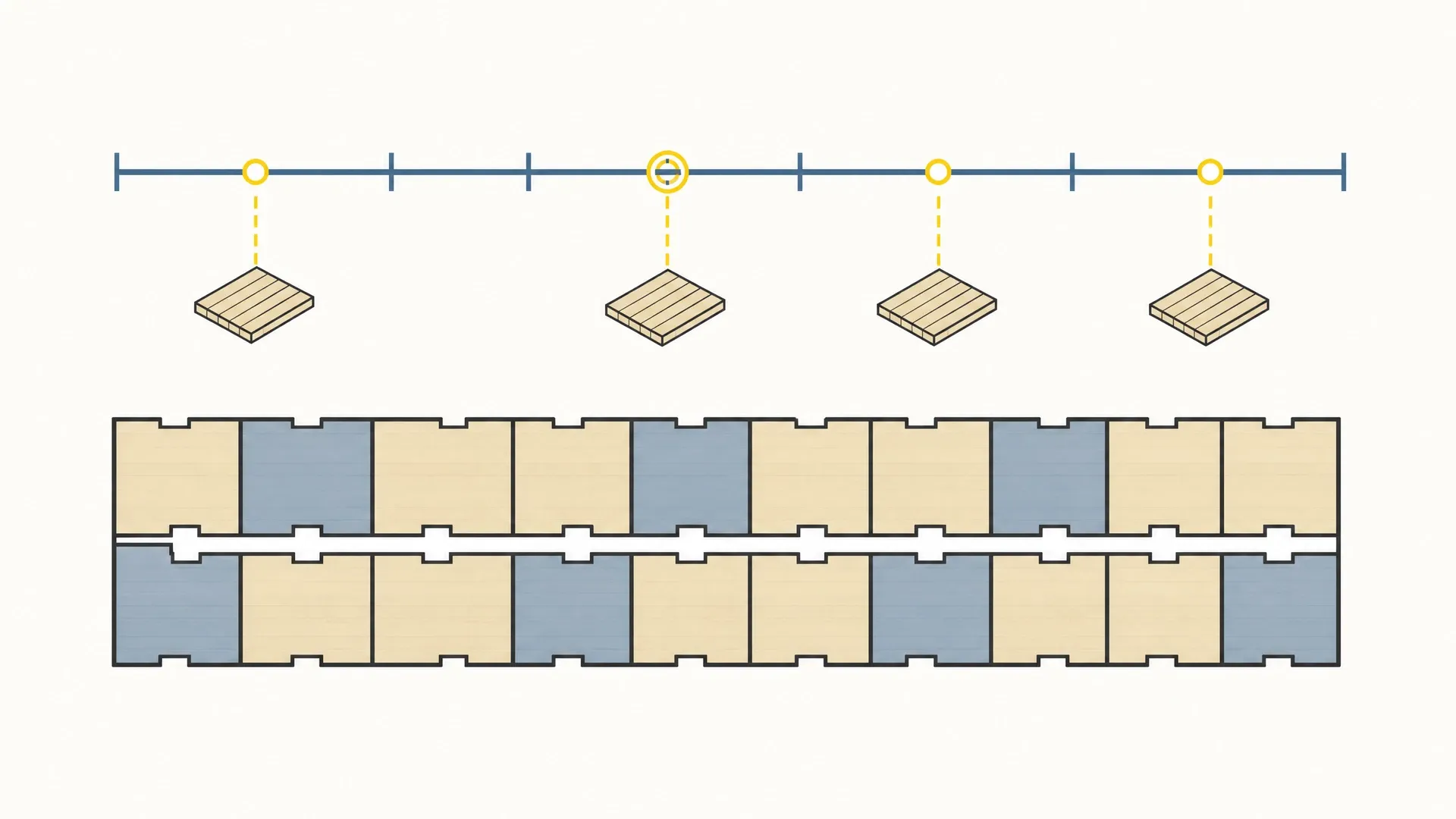
Scheduling flooring work between tenants
A day-by-day schedule for rental turnover flooring: access, strip-out, moisture testing, cure times, handover photographs and the buffer day.
- Read →
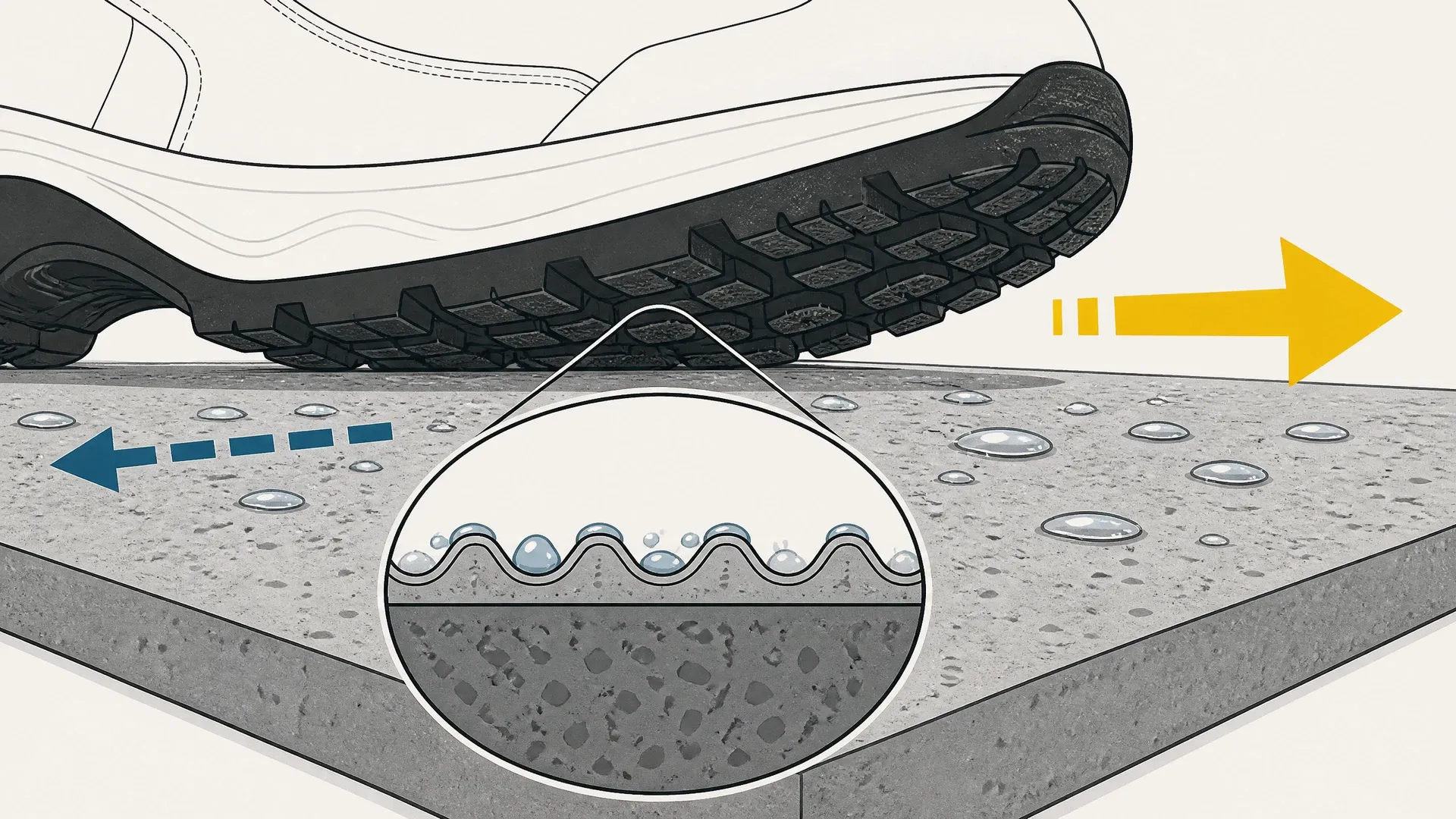
Slip resistance ratings explained
Slip ratings are not interchangeable. Compare the pendulum test, R ratings, barefoot A/B/C classes and DCOF, then specify the right test for each wet area.
- Read →
Building a 10-year floor replacement budget for a rental portfolio
How to build a rolling ten-year flooring capital plan for a rental portfolio: unit inventory, condition grades, service-life bands, provisions and review.
 Rental Properties
 Commercial Spaces
 Durability
 Maintenance
06 FAQ
Questions that decide the specification.
Direct answers. Where a number depends on the building, the answer says so.
What is the difference between an AC rating and a wear layer?
AC classes are an abrasion rating used for laminate floors. Resilient floors such as vinyl plank and sheet vinyl are usually specified by wear-layer thickness in mil, plus a use class under ISO 10874. They answer different questions: AC measures surface abrasion, the wear layer measures how much material sits above the print before it reaches it.
Which floor should a rental unit get?
For most rentals the decision is between rigid-core vinyl plank and sheet vinyl. Plank suits rooms with square, dry subfloors and a tenant who wants a wood look. Sheet vinyl wins where water is routine, seams are a risk, or the subfloor is uneven. Both should be specified with a wear layer and a repair plan, not just a colour.
How often does commercial flooring need replacing?
There is no universal interval. Replacement is driven by traffic, cleaning, the subfloor and how the floor was specified. A floor in a back office and a floor at a lobby entrance do not age at the same rate. The practical approach is to inspect high-traffic zones annually and budget from condition, not from a manufacturer claim.
Can a floor be replaced between tenants without closing the building?
Usually yes, if the work is sequenced: strip-out, subfloor inspection, moisture test, installation and cure time. The constraint is not the installation itself but drying, odour and access to the unit. A written schedule with a buffer day is more useful than a promise that the crew will work fast.
Bring the floor plan, the traffic count and the cleaning rota.
A consultation is a scoping conversation: what the space does, what the subfloor is, and which two or three floor types are worth pricing.